Basement Flooding Cleanup in Denver, CO
24/7 basement flooding cleanup in Denver. Water is pumped out, wet carpet and pad come up, and the slab and wall framing are dried against daily readings until they reach the goal.
(888) 532-8620Basement flooding in Denver? Call now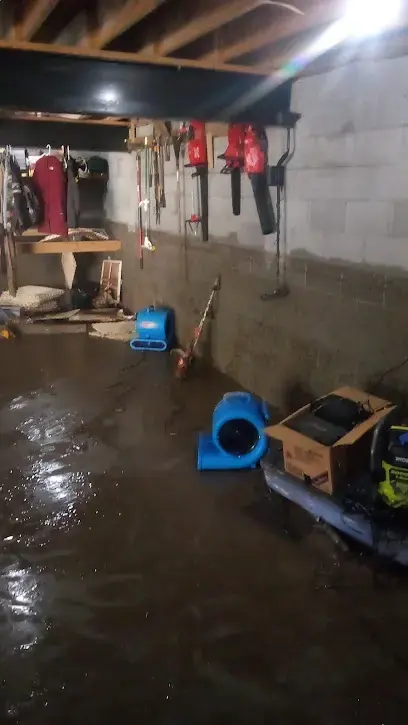
First steps for basement flooding cleanup in Denver
- 01
Find the shut-off first
Look on the wall facing the street, usually in the basement or crawl space, and close it if a pipe is the source.
- 02
Keep power off
Turn off wet-area breakers only from a dry spot, and stay out of deep water near outlets.
- 03
Photograph the water line
Wide and close photos of walls, floors and belongings show how high the water rose.
- 04
Call before it settles
Water climbs into drywall and soaks the slab over hours, so early pump-out saves more material.
How basement flooding cleanup is handled in Denver
In most single-family homes served by Denver Water, the main shut-off valve is in the basement or crawl space on a wall facing the street. That puts the home's own water supply in the same room as the flooding, so the first job is often reaching the valve safely. Closing it matters when a pipe, not rain, is feeding the water.
What does basement flooding cleanup cost in Denver, CO?
Basement flooding cleanup in Denver commonly runs $2,500 to $7,000 for an unfinished or lightly finished basement and $5,000 to $14,000 for a fully finished one with carpet and drywall.
Unfinished basement
- Concrete floor and bare walls
- Pump-out and extraction
- Slab dried with dehumidifiers
Finished basement
- Carpet, pad and lower drywall
- Flood cuts above the wet line
- Framing and slab dried
Category 3 basement
- Sewage or outside floodwater
- Containment and removal
- Cleaning before drying
Ranges are typical, not a quote: the water category, square footage, material class and how fast drying started move the number most. Run the water damage cost calculator for a closer range.
The basement flooding cleanup process, start to dry
The tech who does the walkthrough maps moisture before any equipment goes down, so the drying plan matches what is actually wet.
- 1
Pump and extract
Deep water goes first, then carpet and slab are extracted.
- 2
Map the walls
Meters and thermal imaging find wet drywall and hidden pockets.
- 3
Open what failed
Only the wet strip of wall comes out, so dry framing stays put.
- 4
Dry to the goal
Dehumidifiers run and readings are logged daily until materials are dry.
What a basement keeps wet
A basement is built from concrete, and concrete drinks water slowly and gives it back slowly. Carpet, pad and the bottom of the drywall wick moisture upward, so a puddle that looks shallow can mean wet walls a foot above the floor.
The crew pumps out deep water, lifts pad and flooring that cannot dry, and opens drywall only where meters read wet. Studs and the slab then dry in place.
- Carpet and pad that sat in the water
- Baseboard and the lowest strip of drywall
- Stored boxes and furniture legs on wet floors
Cracked floors and soil
Expansive clay swells when wet and shrinks when dry across Colorado, and the Colorado Geological Survey lists cracked basement and garage floors among its common signs. Water that finds those cracks is one reason some basements flood again after a heavy rain, and it is why the tech looks at the slab itself and not only the carpet. Photos of cracks and wet edges go into the claim notes.
The tech notes where water entered and photographs it for the claim. If the water came through a window opening, see window well flooding.
Drying below grade
Even in Denver's generally low humidity, a below-grade room stays cool, and cool surfaces dry slowly. Dehumidifiers run until slab and stud readings match a dry reference, and the crew shifts equipment as each area dries. The pace depends on how deep the water sat and what the floor is made of. Costs and ranges are explained in the cost calculator.
Trade fact: The Platte to Park Hill stormwater plan aims to reduce flood risk east and north of downtown Denver.
Basement flooding cleanup across Denver and nearby areas
The Denver crew handles flooded basements in Park Hill, Virginia Village, Speer, Cherry Hill Heights and Central Park, plus older blocks around Curtis Park and Five Points, at any hour.
The same service nearby: basement flooding cleanup in Commerce City, Glendale, Federal Heights.
Water damage restoration in Denver · every neighborhood covered
Related water damage services in Denver
Basement Flooding Cleanup questions in Denver, CO
Still dealing with it?
Close the main if a pipe is the source and call. Denver dispatch runs 24/7.
(888) 532-8620Start the Denver basement dry-outWhere do I shut off water in a Denver basement flood?
In most homes served by Denver Water the main valve is in the basement or crawl space on the street-facing wall. Close it if a pipe is feeding the flood.
How long does a flooded basement take to dry?
A clean-water flood often dries in three to five days. A finished basement on a slab may take five to seven, and sewage adds removal time first.
Does all the drywall have to come out?
No. Clean water that is caught early often leaves the upper wall dry. Drywall soaked by floodwater or sewage is cut out above the wet line.
Can cracked basement floors let water in?
They can. Colorado expansive clay moves as it wets and dries, and cracks in basement slabs are a listed sign of that movement.
Will a basement flood be covered by my policy?
That depends on the source and the policy. Sudden pipe failures and outside water are often handled differently, so ask your insurer before work is scoped.
What is dried first, the slab or the walls?
Both start together. Equipment is set after extraction, and readings tell the crew which surface is lagging.
Water in a Denver basement?
Pump-out, targeted cuts and drying to a measured goal, any hour.
(888) 532-8620Call about the Denver basement