Basement Flooding Cleanup in Glendale, CO
24/7 flooding cleanup for lower levels in Glendale. The crew pumps out the water, opens walls only where meters point, and dries the slab and framing to a measured goal.
(888) 532-8620Flooded lower level in Glendale? Call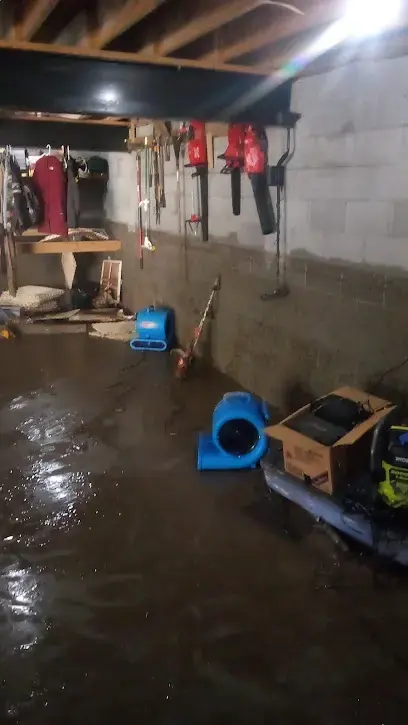
First steps for basement flooding cleanup in Glendale
- 01
Stay out of deep water
Do not wade through standing water near outlets, cords or appliances until the power is off.
- 02
Stop the source if possible
Close the shut-off for a failed pipe, and tell the building manager about flooding that came from outside.
- 03
Photograph the water level
Take photos of the water level on walls and furniture before anything moves.
- 04
Call before it soaks in
Concrete, drywall and carpet pad take on more water by the hour, so early pumping saves more material.
How basement flooding cleanup is handled in Glendale
Water finds the lowest point in a building, whether it came from heavy rain, a failed pipe or a backed-up drain, and a flooded lower level is cleaned up the same way in any building. Pumping comes first, then the careful work of finding what stayed wet.
What does basement flooding cleanup cost in Glendale, CO?
Basement flooding cleanup in Glendale commonly runs $2,500 to $5,000 for an unfinished space and $5,000 to $14,000 for a finished one, with contaminated water pushing the total higher still.
Unfinished space
- Water pumped out
- Slab and walls dried
- Little tear-out
Finished lower level
- Pad, carpet and lower drywall out
- Flood cuts above the wet mark
- Framing and slab dried
Category 3 water
- Containment and HEPA scrubbing
- Porous materials removed
- Antimicrobial before drying
Ranges are typical, not a quote: the water category, square footage, material class and how fast drying started move the number most. Run the water damage cost calculator for a closer range.
The basement flooding cleanup process, start to dry
The tech who does the walkthrough maps moisture before any equipment goes down, so the drying plan matches what is actually wet.
- 1
Pump it out
A submersible pump clears standing water and the crew notes the category.
- 2
Map what is wet
Meters and thermal imaging show how far water traveled in the slab and walls.
- 3
Open only what must open
Soaked pad and wet drywall come out; sound framing stays to dry.
- 4
Dry to the goal
Dehumidifiers and air movers run until daily readings reach the S500 goal.
Where Glendale rain water goes
Glendale's storm drains carry street runoff and snowmelt directly into Cherry Creek, so a heavy storm sends water toward the creek quickly. Snowmelt takes the same route, so a quick thaw can add to the load. When drains and streets cannot keep pace, water can find its way into low rooms and entries.
Pumping, then opening up
The crew removes standing water with a submersible pump, then checks the slab, the bottom of the walls and any finished surfaces with meters. Drywall wet with clean water may stay, while anything soaked by contaminated water is cut out above the wet mark. Wet insulation behind the lower drywall usually comes out with it.
- Pad and carpet pulled when soaked
- Baseboards removed so walls can breathe
- Concrete and framing dried in place
Who needs to know
In a multi-unit building, flooding on a low level affects more than one household. The manager should hear about it right away, and the claim file should record which rooms were wet and what was removed.
If the water came from outside, see window well flooding. If it came from a drain, see sewer backup cleanup.
Drying the structure
Once the water is out, dehumidifiers and air movers dry the slab and the framing together. A concrete floor can stay damp for days, so the crew logs readings daily and removes equipment only when the numbers reach the dry goal.
- LGR and desiccant dehumidifiers
- Air movers aimed along the walls
Trade fact: Concrete holds moisture long after the surface looks dry, so meters decide when equipment leaves, not the eye.
Basement flooding cleanup across Glendale and nearby areas
Glendale's flooded lower levels get the same response from Infinity Park to Creekside Park and the blocks along Birch Street, Cherry Street and Mir Park, day or night.
The same service nearby: basement flooding cleanup in Commerce City, Denver, Federal Heights.
Water damage restoration in Glendale · every neighborhood covered
Related water damage services in Glendale
Basement Flooding Cleanup questions in Glendale, CO
Still dealing with it?
Keep out of deep water, stop the source if you can and call. Glendale dispatch is up 24/7.
(888) 532-8620Start Glendale flood cleanupHow long does a flooded lower level take to dry?
A clean-water flood often dries in three to five days. Concrete holds moisture longer, and sewage or storm water adds removal time first.
Where does storm water in Glendale go?
Storm drains carry street runoff and snowmelt directly into Cherry Creek without treatment, so heavy rain moves toward the creek quickly. Low rooms in any building can still take on water.
Is flood water in a lower level dangerous?
It can be. Water from outside or from a drain is Category 3 and is handled with protective gear and containment. Clean supply water is far less risky.
What happens to the carpet and drywall?
Soaked pad is usually removed. Drywall wet with clean water can often stay, while drywall that sat in contaminated water is cut out above the wet mark.
Who should hear about the flooding?
Your insurer, and in a multi-unit or rented building the landlord or manager as well. Photos of the water level help every conversation.
Lower level flooded in Glendale?
Pumping, flood cuts and drying around the clock, with a claim-ready record of every step.
(888) 532-8620Call about Glendale flooding