Basement Flooding Cleanup in Federal Heights, CO
24/7 help when water reaches a lower level in Federal Heights. The crew pumps it out, opens walls only where readings point, and dries the floor and framing to a measured goal.
(888) 532-8620Water in your basement? Call now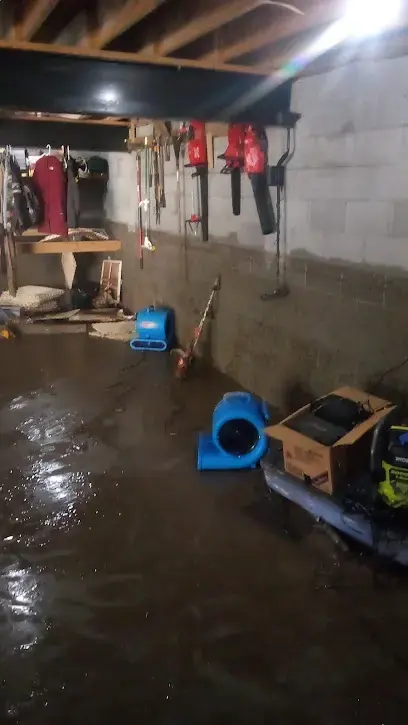
First steps for basement flooding cleanup in Federal Heights
- 01
Stop the source
Shut off the main or the failed fixture if it is safe. Never wade into water that touches outlets, a panel or appliance cords.
- 02
Power down
Turn off breakers for the flooded area from a dry spot, and call an electrician if the panel itself is wet.
- 03
Move valuables
Carry small items, files and electronics upstairs and lift furniture onto blocks.
- 04
Document, then call
Photograph the water line and the damaged items before anything is moved, then call for pumping.
How basement flooding cleanup is handled in Federal Heights
Not every Federal Heights home has a lower level, but where one exists, it is where water settles first. Burst pipes, storm runoff and backed-up drains all end up at the lowest floor, and what happens in the first hours decides how much has to be replaced.
What does basement flooding cleanup cost in Federal Heights, CO?
Basement flooding cleanup in Federal Heights commonly runs $2,500 to $5,000 for an unfinished space and $5,000 to $14,000 for a finished one, while Category 3 water can reach $7,000 to $18,000.
Unfinished basement
- Bare floor and walls
- Pumping and drying
- Little to remove
Finished basement
- Carpet and pad out
- Lower drywall cut
- Framing dried
Category 3 basement
- Sewage or floodwater
- Containment used
- Porous materials removed
Ranges are typical, not a quote: the water category, square footage, material class and how fast drying started move the number most. Run the water damage cost calculator for a closer range.
The basement flooding cleanup process, start to dry
The tech who does the walkthrough maps moisture before any equipment goes down, so the drying plan matches what is actually wet.
- 1
Pump it out
Submersible and truck-mounted pumps clear standing water from the lowest floor.
- 2
Map the moisture
Thermal imaging and meters show which walls and floors hold water.
- 3
Remove what failed
Soaked carpet, pad and wet insulation go out; sound drywall and framing stay to dry.
- 4
Dry and verify
Dehumidifiers and air movers run with readings until the dry goal is reached.
What the first visit looks like
The crew starts by pumping standing water and mapping what is wet. Thermal imaging and a pinless meter separate damp finishes from truly saturated ones, so walls are opened only where the readings say moisture is trapped.
- Carpet and pad removed when soaked
- Flood cuts made above the wet line
- Baseboards pulled to let walls breathe
Where the water came from matters
A supply pipe leak, rain pushing in through a window well and a backed-up drain are three different losses. Clean water can often be dried in place, while sewage and floodwater are contaminated and call for removal of porous materials.
A sewage backup is Category 3 from the start and is handled under containment. See sewer backup cleanup for that case.
Drying a lower level
Cool concrete and framing release moisture slowly, so dehumidifiers run longer there than in an upstairs room. Readings every visit decide when each machine can leave.
Renters should photograph the water line and tell the landlord right away, since about 49.1 percent of occupied homes in the city are rented and shared-building leaks affect more than one household.
The claim file starts early
The claim file starts before the first pump runs. Photos of the water line, a note of when the water was found and readings from each room give the adjuster a clear record of what was wet and when.
Rain-driven water is a different loss from a pipe failure, so see storm and flash flood cleanup when weather was the cause.
Trade fact: Drywall wicks water upward past the visible line, so the cut is made higher than the stain to reach dry material.
Basement flooding cleanup across Federal Heights and nearby areas
The crew works lower-level floods across Federal Heights, from the Federal Boulevard corridor to Ruston Park and Messina Park, and out to Kimberly Hills, at any hour of the day or night.
The same service nearby: basement flooding cleanup in Commerce City, Northglenn, Thornton.
Water damage restoration in Federal Heights · every neighborhood covered
Related water damage services in Federal Heights
Basement Flooding Cleanup questions in Federal Heights, CO
Still dealing with it?
Shut off the source if it is safe and call. Dispatch for Federal Heights runs 24/7.
(888) 532-8620Start Federal Heights flood removalDoes every Federal Heights home have a basement?
No. Housing here includes mobile homes, apartments and houses, and not every building has a lower level. Where one exists, it is the first place water settles.
Is it safe to walk into flooded water?
Not until the power to that area is off. Water near outlets, panels or cords can carry current, and sewage or floodwater can carry contamination.
How soon can mold become a worry?
Mold can start on wet drywall paper and wood within 24 to 48 hours, which is why pumping and drying begin right away.
Will carpet and drywall have to go?
Soaked pad and carpet usually go, and drywall is cut above the wet line when it stays wet. Clean-water drywall that dries early can often stay.
Why do dehumidifiers run so long in a lower level?
Cool concrete and framing give up moisture slowly, so drying continues until the readings match a dry reference.
Can insurance cover a flooded basement?
That depends on the cause and the policy. Many policies treat a sudden pipe break differently from rising groundwater, so ask the insurer before the repair is scoped.
Flooded lower level in Federal Heights?
Pumping, mapping and structural drying around the clock, from the first inch to the last reading.
(888) 532-8620Call about the Federal Heights flood