Water Extraction and Removal in Commerce City, CO
24/7 water extraction in Commerce City. The extraction crew pulls standing water out of carpet, pad and the slab with truck-mounted units, so the drying can start on the same visit.
(888) 532-8620Standing water? Get it pulled now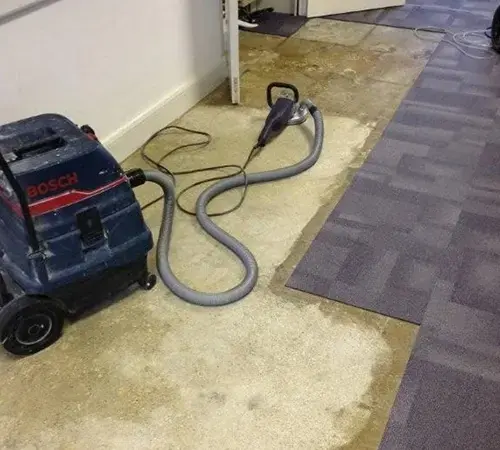
First steps for water extraction and removal in Commerce City
- 01
Stop the source
Close the main shutoff or the valve feeding the leak, and keep children and pets off wet floors.
- 02
Kill power to wet rooms
Only switch breakers off from a dry spot. Unplug nothing while standing in water.
- 03
Lift what you can
Move furniture, boxes and rugs off wet carpet and set foil or blocks under furniture legs.
- 04
Call for extraction
Water that sits a day wicks higher and soaks the pad through. Fast extraction keeps more material in place.
How water extraction and removal is handled in Commerce City
Extraction is the cheapest drying there is. A truck-mounted unit removes water as a liquid, which is many times faster than pulling the same water out of the air with dehumidifiers. In Commerce City most extraction jobs happen in basements, where water from a split pipe, a water heater or a window well spreads across carpet laid on a concrete slab.
What does water extraction and removal cost in Commerce City, CO?
Water extraction in Commerce City typically runs $500 to $1,500 for a single room and $1,500 to $4,500 for a flooded basement, with drying equipment billed by the day on top.
Single room
- Portable or truck-mounted extraction
- Clean water caught early
- Carpet usually saved
Flooded basement
- Truck-mounted extraction
- Pad pulled, carpet floated
- Slab readings logged
Category 3 water
- Protective gear and containment
- Carpet and pad removed
- Antimicrobial before drying
Ranges are typical, not a quote: the water category, square footage, material class and how fast drying started move the number most. Run the Commerce City water damage cost calculator for a closer range.
The water extraction and removal process, start to dry
The tech who does the walkthrough maps moisture before any equipment goes down, so the drying plan matches what is actually wet.
- 1
Walkthrough and moisture map
The tech maps how far the water traveled with meters and thermal imaging.
- 2
Extraction
The extraction crew pulls standing water from carpet, pad and the slab until the wand runs dry.
- 3
Drying setup
Air movers and LGR dehumidifiers go in, sized to each room's class of loss.
- 4
Daily readings
Readings go in the log every day until materials reach the dry goal.
Why extraction comes before everything else
Carpet pad soaks up water like a sponge, and drywall wicks it upward through the paper face. The longer water stands, the higher it climbs and the more material has to be cut out instead of dried.
The extraction crew works the wettest areas first, then makes repeated slow passes until the wand stops pulling water. Weighted extraction tools press water out of carpet and pad that a wand alone leaves behind.
- Truck-mounted extraction for large basement floods
- Portable extractors for upper floors and tight spaces
- Weighted extraction tools for carpet left in place
- Submersible pumps when water stands several inches deep
Carpet, pad and the slab
Clean water caught early often lets carpet stay: the crew extracts, floats the carpet and dries both sides. Pad is cheap and holds water, so it is usually pulled. Category 3 water changes everything, because carpet and pad it touched come out.
A concrete slab keeps giving up water after the surface looks dry. The tech checks it with meters before setting dehumidifiers, and slab readings decide when equipment comes out.
After the water is out
Extraction ends when the floor stops giving up water, not when it looks dry. The drying team then sets air movers and LGR dehumidifiers to the class of loss and logs readings daily. The Ready.gov flood safety guidance covers staying safe around standing water, and the EPA WaterSense program explains how household leaks start.
- Moisture map of every wet room
- Daily readings in the drying log
- Equipment stays until materials hit the dry goal
Trade fact: removing one gallon of water with an extractor takes seconds; pulling the same gallon out of the air with a dehumidifier takes far longer.
Water extraction and removal across Commerce City and Adams County
The Commerce City restoration crew covers ZIP 80022 and 80037, from the older Derby blocks near Highway 2 to the newer northern-range neighborhoods of Buffalo Run, Reunion and Second Creek.
Nearby coverage reaches Denver, Thornton, Northglenn, Federal Heights, Glendale.
See every Commerce City neighborhood and nearby area covered
Related water damage services in Commerce City
Water Extraction and Removal questions in Commerce City, CO
Still dealing with it?
Shut off the main if it is safe, then call. The extraction crew runs 24/7.
(888) 532-8620Pull the water out nowHow fast should water be extracted?
As soon as possible. Within the first day most clean water can be extracted before it wicks deep into drywall and pad, which keeps more material in place.
Can a shop vac do the job?
A shop vac helps with a small spill but pulls a fraction of what a truck-mounted extractor does, and it cannot press water out of pad or reach water in the slab.
Will my carpet be saved?
Often, if the water was clean and extraction started early. Pad usually comes out. Carpet touched by sewage or floodwater is removed.
Is extraction covered by insurance?
Extraction after a sudden and accidental leak is often part of a covered loss. Coverage depends on your policy, so check with your own insurer.
How long does drying take after extraction?
A contained clean-water loss usually dries in three to five days. Basements on a slab and dense materials take longer.
Why do you check the floor after it looks dry?
Concrete and pad hold water out of sight. Meter readings decide when drying is done, not how the surface looks.
Water standing on the floor in Commerce City?
Truck-mounted extraction and structural drying, any hour, across Commerce City.
(888) 532-8620Get extraction rolling