Sewer Backup Cleanup in Denver, CO
24/7 sewer backup cleanup in Denver. Sewage from a floor drain or toilet is treated as Category 3, so the crew contains the area, removes what it soaked and cleans before any drying starts.
(888) 532-8620Sewage backup in Denver? Call now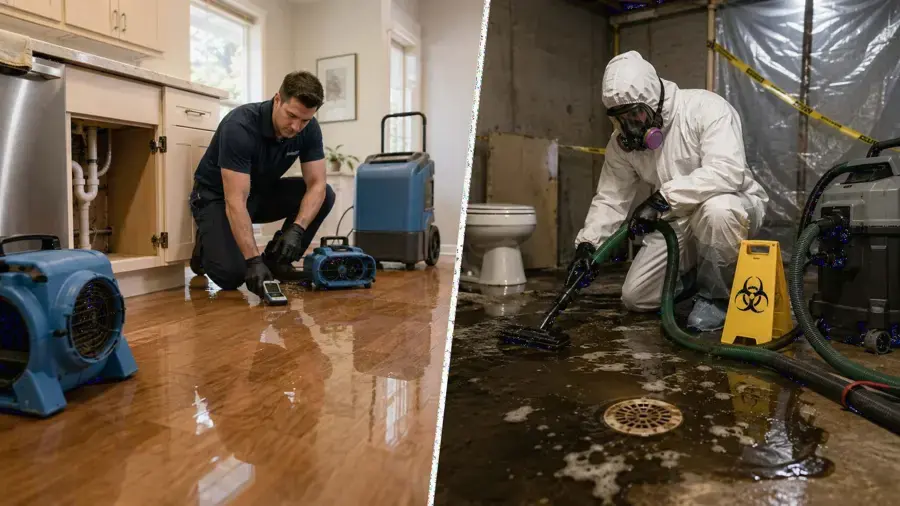
First steps for sewer backup cleanup in Denver
- 01
Stay out of the area
Keep people and pets away from the affected room, and do not run water down the drains.
- 02
Open air safely
Ventilate from a clean side only if that is safe, and keep doors to clean rooms shut.
- 03
Skip the mop
Spreading sewage with towels or a wet vacuum carries it into more materials.
- 04
Call for containment
A crew with protective gear can seal the area and begin removal under Category 3 rules.
How sewer backup cleanup is handled in Denver
Sewage is contaminated from the moment it surfaces, and the smell is only part of the problem. Inside Denver, sanitary sewage service is run by the Wastewater Management Division of the Department of Transportation and Infrastructure, and the property's own drains are where a backup shows itself first.
What does sewer backup cleanup cost in Denver, CO?
Sewer backup cleanup in Denver commonly runs $2,500 to $6,000 for a contained floor-drain backup on bare concrete and $6,000 to $16,000 when sewage reaches a finished basement.
Floor-drain backup
- Bare concrete floor
- Extraction and disinfecting
- Short drying cycle
Finished basement
- Carpet, pad and drywall removed
- Containment and air scrubbers
- Antimicrobial and drying
Large or repeat backup
- Several rooms or levels
- Heavy removal
- Extended drying
Ranges are typical, not a quote: the water category, square footage, material class and how fast drying started move the number most. Run the water damage cost calculator for a closer range.
The sewer backup cleanup process, start to dry
The tech who does the walkthrough maps moisture before any equipment goes down, so the drying plan matches what is actually wet.
- 1
Contain the area
Plastic barriers and negative air keep contamination in one zone.
- 2
Extract sewage
Standing sewage is pumped and extracted with protective gear on.
- 3
Remove porous materials
Soaked carpet, pad and drywall are cut out and bagged.
- 4
Clean, then dry
Surfaces are treated, then dehumidifiers dry what remains.
Why sewage is not treated like a leak
Clean supply water can often be dried in place. Sewage carries bacteria into whatever it touches, so porous materials such as carpet, pad and low drywall are removed instead of dried.
The crew wears protective gear, seals the work area with plastic and keeps air from drifting into clean rooms. A HEPA air scrubber runs while the soaked materials are bagged out, so airborne particles are captured and not carried through the house.
- Floor drains and basement showers
- Toilets that overflow upward
- Washer and sink drains that bubble
Cleaning comes before drying
After removal, surfaces are cleaned and treated with an EPA-registered antimicrobial. Only then do dehumidifiers and air movers go in, because drying contaminated materials can spread what is in them.
A sewage loss often reaches the lower level, so the work overlaps with basement flooding cleanup. Outside floodwater follows the same Category 3 rules under storm flood cleanup.
Who handles what
Denver is a member of Metro Water Recovery, which provides secondary treatment of Denver sewage. Whatever happens downstream, the cleanup inside the property falls to the owner, which is why photos, readings and notes on each removed material go into the claim file for the adjuster.
Trade fact: Backed-up sewage is treated as contaminated water, and soaked porous materials are normally removed rather than dried.
Sewer backup cleanup across Denver and nearby areas
The Denver crew responds to sewage backups from Uptown and North Capitol Hill to Globeville, Sun Valley, Indian Creek and Stapleton, in homes and small businesses, at any hour.
The same service nearby: sewer backup cleanup in Commerce City, Glendale, Federal Heights.
Water damage restoration in Denver · every neighborhood covered
Related water damage services in Denver
Sewer Backup Cleanup questions in Denver, CO
Still dealing with it?
Stay out, keep the drains quiet and call. Denver dispatch runs 24/7.
(888) 532-8620Start Denver sewage cleanupWhy is sewage called Category 3?
It is the most contaminated water category in the restoration standard. Sewage carries bacteria, so porous materials it touched are removed.
Can carpet be cleaned after a sewage backup?
Usually not. Carpet and pad soaked by sewage are removed, since cleaning cannot reach the contamination held inside them.
Who runs the sewer service in Denver?
Sanitary sewage service inside Denver is provided by the Wastewater Management Division of the Department of Transportation and Infrastructure.
Is it safe to stay in the house?
It depends on how far the sewage spread. The crew will say which rooms are off limits and which stay clear while containment is up.
How long does sewage cleanup take?
Removal and cleaning often take a day or two, followed by a few days of drying. Larger losses on finished basements take longer.
Does insurance cover sewer backup?
Backups are often an add-on or a separate endorsement. Check your own policy and ask your insurer before the scope is written.
Sewage backing up in Denver?
Containment, removal and cleaning handled as Category 3, any hour.
(888) 532-8620Call about the Denver backup