Structural Drying and Dehumidification in Glendale, CO
When water has soaked past the surface, the Glendale drying team sizes dehumidifiers and air movers to the loss, dries framing, subfloor and concrete, and logs readings every day until the dry goal is met.
(888) 532-8620Wet walls in Glendale? Call now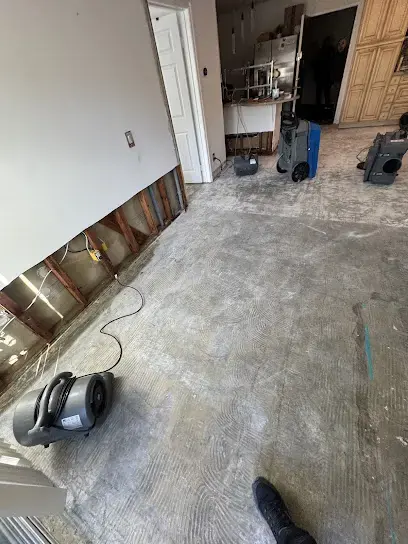
First steps for structural drying and dehumidification in Glendale
- 01
Open up airflow
Lift small items and open cabinet doors so air can circulate.
- 02
Leave equipment alone
Once dehumidifiers and air movers are running, keep them on and do not move the cords.
- 03
Keep doors and windows closed
Closed rooms let dehumidifiers work on the wet materials instead of outside air.
- 04
Let the readings decide
Daily checks show whether materials are drying, and equipment leaves only when they reach the goal.
How structural drying and dehumidification is handled in Glendale
Surface-dry is not dry. Water that soaked into framing, subfloor and concrete stays behind long after the floor looks fine, and wet building materials are what invite swelling and mold. Structural drying removes that moisture on purpose and measures it.
What does structural drying and dehumidification cost in Glendale, CO?
Expect $1,000 to $3,500 for one or two rooms of structural drying in Glendale and $3,500 to $9,000 for several rooms, while dense materials such as concrete or thick framing reach $5,000 to $13,000.
One or two rooms
- Limited wet area in one unit
- A few days of equipment
- Daily readings logged
Several rooms
- Walls, floors and subfloor wet
- More equipment running
- Longer drying period
Dense materials, Class 4
- Concrete or thick framing
- Desiccant dehumidifiers
- Extended drying cycle
Ranges are typical, not a quote: the water category, square footage, material class and how fast drying started move the number most. Run the water damage cost calculator for a closer range.
The structural drying and dehumidification process, start to dry
The tech who does the walkthrough maps moisture before any equipment goes down, so the drying plan matches what is actually wet.
- 1
Measure and classify
Humidity and moisture readings classify the loss and shape the equipment plan.
- 2
Set the equipment
Equipment goes where each room's moisture load calls for it.
- 3
Monitor daily
Meters are read daily and equipment is adjusted as materials dry.
- 4
Confirm the dry goal
Equipment is pulled once the readings settle at the dry reference.
How a dry-out is set up
The drying team measures air temperature and humidity, maps moisture in the materials and classifies the loss. That decides the number of dehumidifiers and air movers each room gets, and where they sit. Thermal imaging helps find wet spots hidden behind paint and flooring.
- LGR dehumidifiers for most wet rooms
- Desiccant units for cold or dense materials
- Air movers pointed along walls and across floors
Multi-family buildings
More than 40 percent of Glendale's housing units were built in the 1970s, and almost all housing is multi-family. In buildings like these, walls, floors and ceilings are shared, so drying plans often cover more than one unit and need the manager's access. For offices and shops, see commercial water damage.
Equipment noise and cords are part of a dry-out, so tenants and neighbors should hear the plan before setup. The log shows each day's readings, and equipment comes out only when the numbers reach the goal.
Why the log matters
Moisture meters, psychrometric readings and a dry reference material gives the adjuster evidence that drying reached the standard. IICRC S500 is the trade standard behind the work, and it counts materials as dry when they sit within 2 to 4 points of the reference.
For the first stage of a loss, see water extraction and removal. Drying that starts quickly also lowers the chance of mold, which can begin within 24 to 48 hours on wet paper and wood.
Trade fact: A concrete slab can hold moisture for days after the surface feels dry, which is why meters, not touch, decide when equipment leaves.
Structural drying and dehumidification across Glendale and nearby areas
Structural drying runs across Glendale, from Infinity Park and Creekside Park to the blocks around Cherry Street, Birch Street and East Kentucky Avenue, with readings logged day after day.
The same service nearby: structural drying and dehumidification in Commerce City, Denver, Federal Heights.
Water damage restoration in Glendale · every neighborhood covered
Related water damage services in Glendale
Structural Drying and Dehumidification questions in Glendale, CO
Still dealing with it?
Open up airflow, keep doors closed and call. Glendale dispatch never closes.
(888) 532-8620Start the Glendale dry-outWhat is structural drying?
Structural drying treats the building itself, meaning framing, subfloor, walls and concrete, using dehumidifiers, air movers and meters.
How many days does structural drying take?
A clean-water loss usually finishes in about three to five days; dense materials and wide spread take longer, and readings set the end date.
Why can't wet materials just air out?
Moisture hides in framing and concrete, and normal air cannot pull it out fast enough. Equipment speeds the process and measures it.
What does the IICRC S500 standard require?
It sets water categories and loss classes, how equipment is sized and when materials count as dry, defined as readings 2 to 4 points above a dry reference.
Who gets the drying records?
The log goes to the adjuster, and the building manager can use it too. It shows each day's readings and why equipment stayed or left.
Wet walls or floors in Glendale?
Dehumidifiers, air movers and daily readings around the clock, until the structure is truly dry.
(888) 532-8620Call about Glendale drying