Frozen Pipe Water Damage in Denver, CO
24/7 frozen pipe water damage help in Denver. When a long arctic stretch splits a pipe, the restoration team finds the break inside the wall, pulls the water and dries the cavity before the damage spreads.
(888) 532-8620Pipe froze in Denver? Call now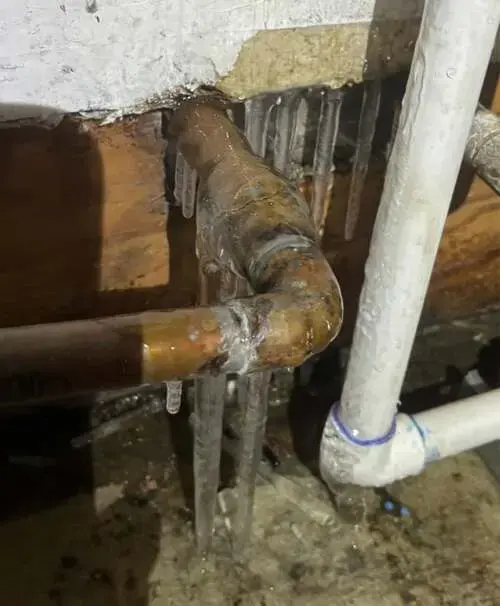
First steps for frozen pipe water damage in Denver
- 01
Stop the supply
Turn the main valve to off, then crack a low faucet so pressure drains out of the pipes.
- 02
Do not thaw by flame
Skip torches and heaters near a frozen pipe. Slow, safe warmth lowers the risk of a sudden split.
- 03
Look for stains
Damp patches, bubbling paint or a sagging ceiling point to a break behind the surface.
- 04
Call early
Water behind a wall keeps spreading, and early drying keeps more drywall in place.
How frozen pipe water damage is handled in Denver
A frozen pipe often does no harm until it thaws. Ice holds a split shut, then the pipe warms, the crack opens and water pours behind a wall or above a ceiling while nobody is looking. In Denver, that usually follows a long cold stretch and not a single bad night.
What does frozen pipe water damage cost in Denver, CO?
Frozen pipe water damage in Denver commonly runs $1,500 to $5,000 when one wall or ceiling is affected and $5,000 to $12,000 when the water reaches a finished basement below.
One wall or ceiling
- One cavity or ceiling wet
- Access holes and cavity drying
- Drywall mostly kept
Wall and basement
- Water reached the level below
- Insulation and drywall removed
- Slab and framing dried
Vacant or unheated home
- Water ran unnoticed
- Several rooms affected
- Long drying cycle
Ranges are typical, not a quote: the water category, square footage, material class and how fast drying started move the number most. Run the water damage cost calculator for a closer range.
The frozen pipe water damage process, start to dry
The tech who does the walkthrough maps moisture before any equipment goes down, so the drying plan matches what is actually wet.
- 1
Locate the split
Thermal imaging and meters follow the water back to the pipe.
- 2
Remove the water
Extraction clears the floor, and wet insulation is pulled from the cavity.
- 3
Dry the cavity
Access holes let dry air move through the wall without wide demolition.
- 4
Confirm and record
Daily readings show each wall reaching the dry goal.
Where freezing pipes cause trouble
Pipes on exterior walls, in unheated basements and in crawl spaces see the lowest temperatures. Days of steady cold give ice time to build inside the pipe and press on the metal until it gives way.
- Supply pipes in exterior walls
- Pipes in an unheated basement
- Hose bibs and crawl-space pipes
Finding a break inside a wall
The tech scans walls and ceilings with thermal imaging, then confirms with moisture meters. Small access holes and cavity drying systems push warm, dry air through the wall, so drywall does not have to come down everywhere. Wet insulation inside the cavity is the usual casualty, since it holds water against the studs.
If the pipe sprayed several rooms under pressure, the work shifts to burst pipe water damage. Water that reached the level below, especially through ceilings or floor gaps, may call for basement flooding cleanup.
Before the next cold snap
Denver Water links the cold-weather breaks in its own water mains to the same natural forces that burst household pipes. Its advice is to insulate exposed pipes, mainly on exterior walls and in unheated basements, and to learn where the shut-off valve sits.
A homeowner who finds the valve now will not be hunting for it while a ceiling drips. Many single-family homes keep it in the basement or crawl space, against the street-facing wall.
Trade fact: Ahead of an arctic blast in January 2025, Denver Water warned of burst pipes while forecasts called for 80 to 100 plus hours of unbroken freezing weather, a test for every exposed pipe.
Frozen pipe water damage across Denver and nearby areas
The Denver team handles frozen pipe losses from LoDo and Uptown to Park Hill, Virginia Village, Indian Creek and Central Park, including older homes with pipes on cold exterior walls.
The same service nearby: frozen pipe water damage in Commerce City, Glendale, Federal Heights.
Water damage restoration in Denver · every neighborhood covered
Related water damage services in Denver
Frozen Pipe Water Damage questions in Denver, CO
Still dealing with it?
Close the main, relieve the pressure and call. Denver dispatch runs 24/7.
(888) 532-8620Start Denver freeze-leak dryingWhy do pipes freeze in Denver?
Long arctic stretches chill pipes in exterior walls and unheated basements until the water inside turns to ice.
Does the damage happen when the pipe freezes or thaws?
Mostly when it thaws. Ice can plug the split, and the water only escapes once the pipe warms and the crack opens.
How do I prevent freezing pipes?
Insulate pipes on exterior walls and in unheated basements, and learn where the shut-off valve is, as Denver Water advises.
Can a wall be dried without tearing it out?
Often, when drywall is lightly wet. Access holes and cavity drying move air through the wall, and wet insulation is usually removed.
Is Denver Water responsible for a burst home pipe?
Per Denver Water, damage from a property's service line or the plumbing inside the home is not its responsibility.
How long does drying take after a freeze split?
Most walls reach the dry goal in three to five days, and a finished basement below takes longer.
Frozen pipe split in your Denver home?
Locate the break, extract and dry the wall, any hour of the day.
(888) 532-8620Call about the Denver frozen pipe