Commercial Water Damage in Denver, CO
24/7 commercial water damage help in Denver. Offices, schools, shops and clinics are extracted and dried in phases so most of the building can keep operating.
(888) 532-8620Business flooded? Call now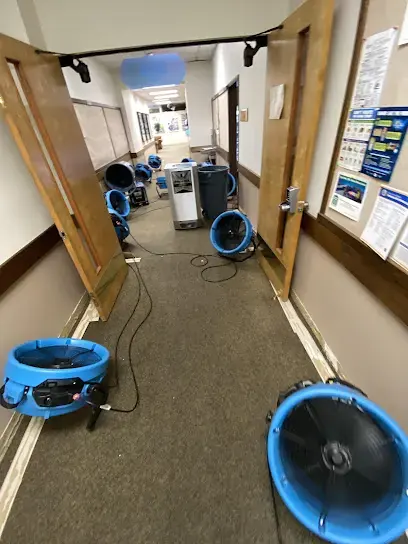
First steps for commercial water damage in Denver
- 01
Shut off the source
Close the nearest isolation valve or the main, and tell the building manager.
- 02
Move people and stock
Clear wet areas of staff, records and inventory before extraction begins.
- 03
Shut power to wet zones
Have the electrician or manager cut breakers to wet rooms from a dry panel.
- 04
Call early
Water crosses suites and floors fast, so early containment limits how many tenants are affected.
How commercial water damage is handled in Denver
Denver's largest employers range from the City and County of Denver, Denver Public Schools and the State of Colorado to Denver Health, United Airlines and the University of Denver. That mix means water loss here can hit a classroom, a clinic or a corporate floor.
What does commercial water damage cost in Denver, CO?
Commercial water damage in Denver commonly runs $3,000 to $12,000 for a small shop or office suite and $12,000 to $60,000 or more for warehouse floors and multi-unit losses.
Small shop or office
- One suite or small shop
- Extraction and drying
- Reports for the manager
Multi-unit or large office
- Several tenants or floors
- Phased drying plan
- Temporary power if needed
Warehouse or large loss
- Large floor area
- Heavy extraction equipment
- Extended drying cycle
Ranges are typical, not a quote: the water category, square footage, material class and how fast drying started move the number most. Run the water damage cost calculator for a closer range.
The commercial water damage process, start to dry
The tech who does the walkthrough maps moisture before any equipment goes down, so the drying plan matches what is actually wet.
- 1
Contain the zone
Barriers keep wet areas separate from working space.
- 2
Extract in bulk
Truck-mounted units clear large floors fast.
- 3
Dry in phases
Each zone is dried and released while the next begins.
- 4
Report weekly
Managers get readings and photos on a set schedule.
Keeping a building open
A business loses money while it is closed, so the goal is to dry one area at a time while the rest keeps working. Containment walls off the wet zone, and equipment runs on temporary power where needed.
Large floors get truck-mounted extraction, and ceilings and walls are checked for water that spread above and between spaces.
- Open-plan offices and corridors
- Classrooms and school hallways
- Retail floors and clinic suites
Scale changes the plan
A commercial loss usually crosses tenant walls, shared ceilings and floors. Denver Public Schools alone serves about 92,000 students, and the boundaries of the district match the city limits, so one building system can affect many people.
Equipment is sized to the wet volume, and daily logs keep the property manager informed. Related work includes structural drying and water extraction.
Records for managers
Moisture maps, time-stamped photos and drying logs go into one file for managers, owners and adjusters. That file shows what was removed, what stayed and when each area passed.
Trade fact: Denver's central business landmarks include Union Station, Larimer Square, the Colorado Convention Center and the Auraria Campus.
Commercial water damage across Denver and nearby areas
The Denver team serves business losses from LoDo, Union Station and Golden Triangle to Civic Center, Five Points and Central Park, including offices near Larimer Square and the Colorado Convention Center.
The same service nearby: commercial water damage in Commerce City, Glendale, Federal Heights.
Water damage restoration in Denver · every neighborhood covered
Related water damage services in Denver
Commercial Water Damage questions in Denver, CO
Still dealing with it?
Shut off the source, clear the wet zone and call. Denver dispatch runs 24/7.
(888) 532-8620Start Denver commercial dry-outCan a business stay open during drying?
Often. Phased drying and containment dry one zone at a time so the rest of the building can keep operating.
What types of commercial properties are handled?
Offices, schools, shops, clinics, restaurants and multi-unit buildings, from small suites to large floors.
How are large floors extracted?
Truck-mounted units clear big open areas, and portable units handle corners and tight rooms.
Who gets the drying reports?
Property managers, owners and adjusters receive the moisture maps, daily readings and photos.
Does the building owner or tenant handle the claim?
That depends on the lease and policy. The documentation supports either, and the owner or tenant works it out with the insurer.
How long does a commercial dry-out take?
A small suite may dry in about a week. Large floors and dense materials take longer, and phased release keeps the timeline visible.
Water loss in a Denver business?
Containment, extraction and phased drying around your operations, any hour.
(888) 532-8620Call about the Denver property