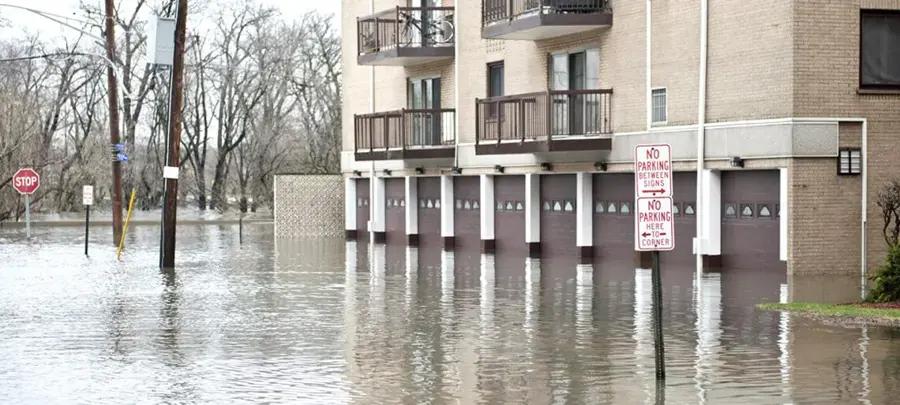
When streets close for flooding in Thornton, the same storm is often moving water toward garages, doors and low spots around homes. Three events stand out in the local record: May 2011, September 2013 and May 12, 2023.
Key takeaways
- Roofs, streets, driveways and parking lots keep rain from soaking in, so runoff moves into storm sewers and the creek basins that drain Thornton.
- Street closures in May 2011 and on May 12, 2023 show how quickly roads fill during heavy rain.
- ThorntonWeather.com recorded 8.85 inches of rain from September 9 to 16 during the 2013 Front Range flood.
- Standing water that reaches a home is treated as contaminated until proven otherwise, and it needs extraction before drying.
- Any lower level needs fast pumping and drying after a storm.
How Thornton storm water moves
A lot of Thornton is paved or roofed. Roofs, streets, driveways and parking lots keep rain from soaking into the ground, so runoff goes into storm sewers and the creek basins.
The city's stormwater drains to basins including Big Dry Creek, Brantner Gulch, Todd Creek, Grange Hall Creek and Niver Creek. All of them flow to the South Platte River.
- Hard surfaces send rain to the storm sewers instead of the soil.
- A heavy cloudburst can send more water than a street can carry.
- Water that cannot reach a drain pools in low spots, driveways and entries.
Three storms that put streets underwater
The local record shows how often heavy rain closes roads. Each event is a reminder that the water reaching a home does not start at the house.
May 2011 and the closures north of 128th Avenue
In May 2011, street flooding closed 128th Avenue between Quebec Street and Riverdale Road. It also closed Riverdale Road between Henderson Road and 130th Avenue, and York Street between E-470 and State Highway 7.
September 2013 and the Front Range flood
ThorntonWeather.com recorded 4.76 inches on September 12 and 8.85 inches from September 9 to 16. The National Weather Service reports that 6 to 18 inches of rain fell in many Front Range areas during those floods.
May 12, 2023 and the closures near York Street
On May 12, 2023, Thornton police closed East 144th Avenue between Washington Street and York Street because of flooding. York Street was also closed between E-470 and East 156th Avenue, and East 156th Avenue was closed between York Street and Colorado Boulevard.
How storm water gets into a house
Flooded streets are the visible sign. The path into a home usually runs through a door, a garage, a low entry or a drain that backs up.
The points here apply to any lower level, garage or low room that water can reach, whatever the home's foundation.
- Water pushing under an exterior door or through a garage opening.
- Runoff collecting against a wall where the ground slopes toward the house.
- A drain or fixture that cannot carry the load during a heavy storm.
What to do when water is inside
Storm water is not clean water, even when it looks clear. It carries soil and whatever the street held, so treat it with care.
Keep children and pets out of the area and avoid wading through it. Shut off power to the affected area first if that can be done safely.
- Do not use household appliances or outlets that are in or near the water.
- Move valuables, papers and electronics to higher ground.
- Photograph the water level and the damage before moving anything.
- Call a restoration crew rather than waiting for the water to drain by itself, because water left standing keeps soaking into floors and walls.
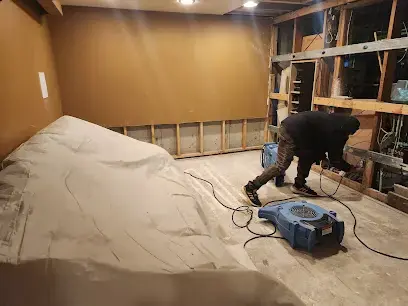
Why speed matters after floodwater
Floodwater does not wait. The longer it stays, the deeper it moves into the materials it touches.
Quick extraction keeps a loss in a smaller area and leaves more of the home to dry in place instead of being torn out.
- Drywall wicks water upward from the base of the wall the longer it sits.
- Carpet pad and padding hold dirty water against the floor.
- Wood framing and subfloors absorb water that is slow to leave.
- Odors and surface growth become more likely the longer the structure stays wet.
How extraction and cleanup work
Cleanup starts with removing the standing water. Thornton water extraction uses pumps and truck mounted equipment to pull water out of a room before it wicks into drywall, carpet pad and framing.
Once the water is out, silt and debris are cleaned off hard surfaces and the area is treated. Porous materials that sat in contaminated water, such as carpet and pad, are usually removed.
Treating the water as contaminated
Floodwater from streets and creeks is handled as contaminated water. That means protective gear, containment where needed and cleaning with antimicrobial products before drying begins.
Drying what is left
Wall cavities, subfloors and framing are measured with moisture meters. Dehumidifiers and air movers then run until the readings reach a dry goal, so nothing is closed up while it is still damp.
Cleaning up after the storm in Thornton
For a full picture of what the work covers, see the storm and flood cleanup page for Thornton, which sets out how floodwater is removed, cleaned and dried.
The Commerce City office also handles storm and flash flood cleanup, and the Thornton page lists every service available to the city.
Preparing before the next heavy rain
A few steps cost almost nothing and make a storm easier to handle. They are worth doing before the rain, not during it.
- Clear leaves and debris from gutters, downspouts and the storm drain nearest the house.
- Check that the ground slopes away from walls and that downspouts discharge well away from the foundation.
- Keep valuables and paperwork off the floor in any low room or garage.
- Know where the main water and power shut offs are so they can be reached quickly.
- Keep a short list of contacts, including a restoration crew, where everyone in the home can find it.
Questions
Is Thornton at risk of flooding every year?
First Street rates Thornton as a minor flood risk, with 189 properties at risk over the next 30 years, about 0.4 percent. Even so, heavy storms in May 2011, September 2013 and May 2023 show that roads and low spots can still flood.
Should I wait for the water to drain before calling a crew?
No. Water that sits keeps soaking into carpet, pad and wall bottoms. Extraction is the first step and it works best when it starts early.
Is flood water from the street safe to walk through?
No. Water that has run over streets and parking lots is treated as contaminated, so it should not be handled without protection.
Does storm water damage mean the whole floor has to be replaced?
Not always. Hard surfaces can often be cleaned and dried, while carpet, pad and other porous materials that sat in contaminated water are usually removed.
What should be photographed after a flood?
Take photos of the water level, the damaged rooms and belongings, and the outside of the house, including any water pooling near the walls.