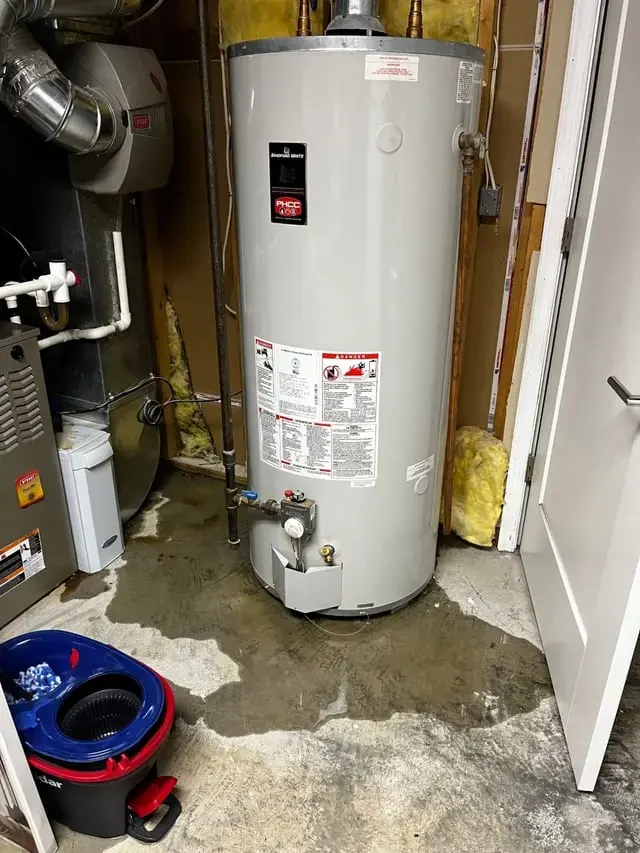
Glendale is an enclave surrounded by the City and County of Denver, and almost all of its housing is multi family. When a water heater tank fails in one apartment, the water rarely stays there.
Key takeaways
- Almost all housing in Glendale is multi family, and more than 80 percent of residents rent, so one leak reaches many households.
- Glendale had 2,806 households at the 2020 census, packed into 365 acres.
- Shut off the cold water supply to the tank first, then tell the building manager and the units around you.
- Water spreads down through ceilings and sideways through shared walls, so neighbors need to be told.
- Drying has to cover framing and ceilings, not only the floor of the unit with the heater.
Why a tank leak is bigger in Glendale
Glendale covers 365 acres and is described as the most densely populated municipality in Colorado. Almost all of its housing is multi family, and more than 40 percent of its units were built in the 1970s.
In a building like that, a water heater leak is a shared event. Water goes through the floor to the unit below and along shared walls to the unit beside.
- More than 80 percent of Glendale residents rent, so the person with the leak is often not the building owner.
- With 2,806 households at the 2020 census, many units sit above or beside another household.
- Much of the limited land is also commercial, including office and residential high rises.
What happens when a tank fails
A tank that fails does not leak slowly in every case. A seam or a corroded fitting can let a lot of water out quickly, and the water goes down the path of least resistance.
In an apartment, that path is usually the floor, then the ceiling of the unit below.
Water from a utility closet
Many apartments keep the tank in a closet. Water pools on the closet floor and then runs under the walls into carpet or flooring in the rest of the unit.
Water in the unit below
Water that gets through the floor soaks the ceiling drywall below, then runs down light fixtures and wall cavities. A stain on a ceiling is often the first sign the neighbors see.
The first steps to take
The first goal is to stop the water at its source. After that, the focus turns to who else is affected.
- Close the cold water supply valve at the top of the tank. If it will not close, shut off water to the unit.
- Turn off the power or gas to the water heater if that can be done safely.
- Tell the building manager right away, because the main shut off and the other units are theirs to reach.
- Knock on the doors of the neighbors below and beside you so they can protect belongings.
- Photograph the tank, the floor and any water that has spread beyond the unit.
Who is responsible for what
The City of Glendale water department keeps the distribution system, which has 213 meters serving most buildings in Glendale and a few in Denver. The city repairs broken water mains and meters.
Repairs to taps and valves are the property owner's responsibility, so a failed valve at the tank is usually an owner repair.
Who pays for a given loss depends on the lease and the policy. Restoration is about stopping the damage first and sorting out the paperwork second.
How cleanup works across several units
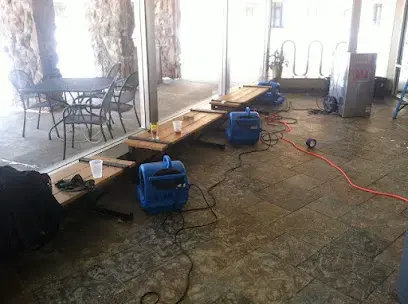
The job begins with water heater leak cleanup, where standing water is extracted from the unit with the tank. Wet carpet pad and flooring that cannot dry in place are removed.
The crew then works through the units below and beside the leak, taking readings in each ceiling and wall so the extent is clear.
Ceilings and walls
Ceiling drywall that is soaked or sagging is cut out. Wall cavities are opened where moisture readings call for it, so water is not left inside.
Structural drying in a shared building
Equipment is placed in each affected unit. Structural drying runs until framing, subfloor and drywall read dry, because the steps are the same in any building.
Coordinating with the building manager keeps the work moving across several households.
Records and communication in a shared building
When a leak crosses several households, clear records save time. A written trail shows what happened, when it started and who was told.
Short notes to the building manager and neighbors also keep the work moving, since every unit that was touched needs readings and drying.
- Write down the time the leak was found and when the supply was shut off.
- Photograph the tank, the floor and any ceiling stains in the units below.
- Ask each affected household to photograph their own damage before moving belongings.
- Keep names and contact details for the building manager and for each neighbor reached.
Pressure, valves and the limits of a tank
The Glendale water system delivers about one million gallons of water a day at an average pressure of about 80 psi. That is a steady supply behind any failed fitting, which is one reason a leak can produce a lot of water quickly.
The tank is also only part of the picture. A cracked fitting, a failed relief valve or a corroded connection can leak just as much.
- Look at the base of the tank for rust streaks, damp spots or mineral crust.
- Tell the building manager about any dampness around the closet before it becomes a flood.
- Know where the cold water shut off for your unit is located and make sure it turns.
Where to find help in Glendale
The Glendale page lists the services that apply across the city, from extraction to structural drying. For the Commerce City office's wider approach to tank failures, see its water heater leak cleanup page.
Questions
Do I have to tell my neighbors about a water heater leak?
Yes, as soon as the water is stopped. Water from your unit may already be moving into the ceiling or wall of a household below or beside you.
Is the building owner responsible for the water heater?
That depends on the lease and the building. In Glendale, the property owner is responsible for repairs to taps and valves, so a failed valve at the tank usually falls to the owner.
Can water damage spread to units that look dry?
Yes. Moisture travels through floors, ceilings and wall cavities before it shows as a stain, so crews check every unit that shares a surface with the leak.
How long does a water heater leak take to dry out?
It depends on how much water spread and which materials it reached. Drying runs until the moisture readings match a dry reference.
Should the water heater be replaced right after a leak?
A leaking tank is normally replaced, not repaired. Check the building's rules and any permit requirements before the new tank goes in.
What if a neighbor's unit is not yet showing damage?
Check anyway. Moisture can sit inside a ceiling or wall for a while before it shows, and a quick reading is much cheaper than a repair later.