Water Extraction and Removal in Northglenn, CO
Around the clock water extraction for Northglenn. The crew pumps standing water out of carpet, pad and concrete, checks what the water reached with meters, and starts drying before it soaks into framing.
(888) 532-8620Standing water in Northglenn? Call now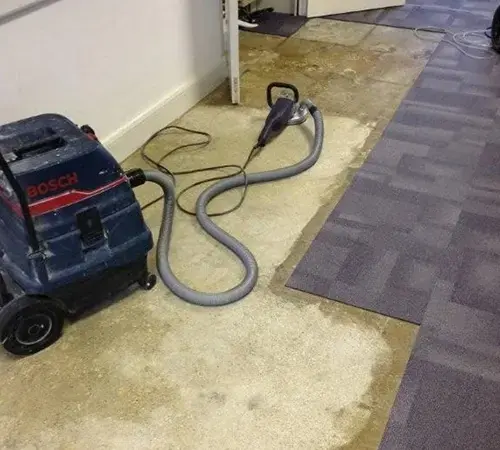
First steps for water extraction and removal in Northglenn
- 01
Stop the source
Shut the main, or ask Northglenn Utilities for an emergency shut-off when a major leak will not stop.
- 02
Keep power away from water
Turn off breakers for wet rooms from a dry spot, and stay off floors where outlets sit near puddles.
- 03
Move what is easy to move
Lift small furniture, rugs and electronics out of the water and set blocks under heavier legs.
- 04
Call for extraction
Pad and carpet hold water like a sponge, so pump-out in the early hours saves more of the floor.
How water extraction and removal is handled in Northglenn
Standing water does its worst work in the first hours, when it leaves the floor surface and wicks into pad, baseboards and the base of the walls. Extraction comes first because no dehumidifier can dry a room that still holds puddles. Northglenn Utilities takes emergency water shut-off requests for major leaks, which helps when a pipe will not stop running.
What does water extraction and removal cost in Northglenn, CO?
Water extraction in Northglenn usually costs $500 to $1,500 for a single room, $1,500 to $4,500 for a flooded basement, and $3,000 to $8,000 when the water is Category 3.
Single room
- Carpet and pad extracted
- Hard floors dried off
- Walls checked with meters
Flooded basement
- Several inches of water
- Pump-out and flood cuts
- Drying equipment set
Category 3 water
- Contaminated water removed
- Porous materials discarded
- Antimicrobial applied
Ranges are typical, not a quote: the water category, square footage, material class and how fast drying started move the number most. Run the water damage cost calculator for a closer range.
The water extraction and removal process, start to dry
The tech who does the walkthrough maps moisture before any equipment goes down, so the drying plan matches what is actually wet.
- 1
Assess the water
The tech checks the source, sorts the water into a category and maps wet areas with meters and thermal imaging.
- 2
Extract
Truck-mounted and portable units pull standing water from carpet, pad and hard floors.
- 3
Remove what cannot dry
Contaminated pad and swollen materials come out, while sound carpet and drywall stay.
- 4
Hand off to drying
Dehumidifiers and air movers go in, and daily readings show when the room is dry.
What the pump-out removes
Extractors pull bulk water from carpet, cushion and hard floors. The tech then reads walls and subfloor with meters, because water that cannot be seen keeps working after the surface looks dry.
- Standing water on carpet and hard floors
- Saturated pad that cannot be saved
- Water pooled in door tracks and low spots
Clean water or contaminated water
The source decides what comes next. Clean supply water usually leaves carpet worth drying, while sewage or outside flood water counts as Category 3 and turns pad and other porous materials into waste.
Why speed matters
Call while the source is still running if possible. A crew can pump out and trace the path of the water in one visit, and the sooner pad and carpet come up, the more of the floor structure stays in place. In a finished space the stakes rise, since baseboards and the lower drywall begin wicking water almost at once. For a flooded lower level, see basement flooding cleanup.
Water in a semi-arid town
Northglenn's semi-arid climate does not stop a leak from soaking a floor. A National Weather Service flood advisory on June 25, 2025 named north Northglenn for possible minor flooding, and one split dishwasher hose can flood a kitchen just as fast. When the water is out, dehumidifiers take over, and structural drying keeps the readings honest.
Trade fact: Carpet lifted early can often be dried and relaid, but cushion that sat in contaminated water is replaced because it cannot be cleaned.
Water extraction and removal across Northglenn and nearby areas
Extraction crews work across Northglenn, from the Webster Lake area and Fox Run to Huron Crossing and the Interstate 25 and State Highway 7 corridors, at any hour.
The same service nearby: water extraction and removal in Commerce City, Thornton, Federal Heights.
Water damage restoration in Northglenn · every neighborhood covered
Related water damage services in Northglenn
Water Extraction and Removal questions in Northglenn, CO
Still dealing with it?
Stop the source, then call for pump-out. Northglenn crews work through every night and holiday.
(888) 532-8620Start Northglenn extractionWhat is water extraction?
Extraction is the removal of standing and absorbed water with pumps and extractor wands, so drying equipment can work on a room that is no longer flooded.
How soon should extraction start in Northglenn?
As soon as the source is stopped. Water moves into pad, baseboards and walls with each passing hour, so a call at the first sign of water saves the most material.
Can wet carpet be saved?
Often, when the water was clean and the carpet is lifted and dried early. Carpet and cushion soaked by sewage or flood water are removed.
Does extraction include drying?
Extraction removes the bulk water. Dehumidifiers and air movers then dry what is left in walls and subfloors, and readings confirm when the job is done.
What if the water comes from a storm?
Storm water is treated as contaminated, so porous materials it touched are usually removed. A June 25, 2025 flood advisory named north Northglenn, so storm water is a local concern.
Will insurance pay for water extraction?
Coverage depends on the cause and the policy. Photos and moisture logs taken before anything is removed give the adjuster what is needed.
Standing water in Northglenn?
Pump-out and structural drying at any hour, from the first puddle to the dry reading.
(888) 532-8620Call about Northglenn water