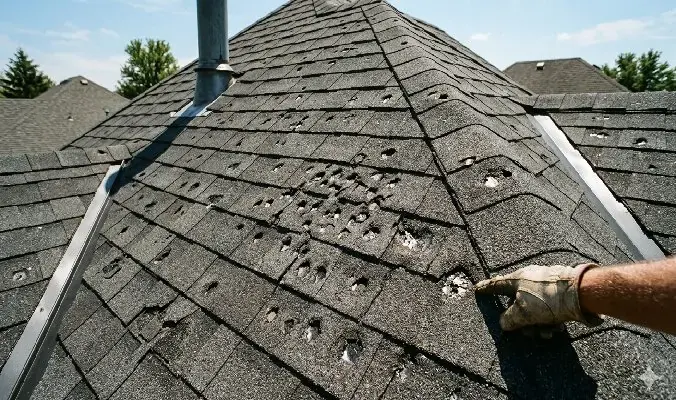
Hail damage does not always announce itself. In Northglenn, the water often arrives days after the storm, as a ceiling stain or a damp spot on a wall.
Key takeaways
- On May 18, 2011, a severe thunderstorm dropped hail 1 to 1.75 inches wide in the Northglenn area, and hail and wind broke windows in Northglenn.
- In 2014, severe thunderstorms produced hail 1 to 1.5 inches wide across parts of Northglenn and nearby cities.
- A damaged roof can leak into the attic before a stain ever shows on the ceiling.
- Wet insulation and ceiling drywall are the usual losses, and both can be dried or replaced.
- Roof repair stops the water, and drying stops the damage that is already inside.
What Northglenn's hail history shows
Northglenn has a semi arid climate, but the record shows that hail does reach the city. A post storm roof check is a reasonable habit for any owner here.
May 18, 2011
A severe thunderstorm dropped hail 1 to 1.75 inches wide in the Northglenn area. Hail and wind broke windows in Northglenn that day.
2014
Severe thunderstorms in 2014 produced hail 1 to 1.5 inches wide across parts of Northglenn and nearby cities.
Two storms of that size within a few years show how often roofs here take impacts.
How hail damage turns into a leak
Hail bruises and cracks shingles, loosens the granules that protect them and can tear flashing around roof penetrations. None of that always causes an instant leak.
The leak starts later, when rain or melting snow finds the damaged spot and runs under the roof covering.
- A cracked shingle lets water reach the underlayment on the next rain.
- Bent or torn flashing gives water a path down along a vent or chimney.
- Broken or cracked windows let rain blow straight into a room.
- Damaged seams near the roof edge can send water into the eaves and walls.
Wind, windows and the 1990 tornado
Hail rarely arrives alone. The May 2011 storm broke windows in Northglenn, which means rain could blow straight into rooms as well as through a damaged roof.
An F1 tornado moved through the Northglenn and Thornton area in 1990 and damaged buildings, cars and trees. Wind driven damage is part of the local record too.
Northglenn was built as a master planned community starting in 1959, and it has a long history of storms to go with it.
- Check window frames and seals after a storm, not only the roof.
- Look for torn flashing and loose roof edges where wind lifts a covering.
- Watch for damp spots near broken or cracked glass that let rain blow in.
Why the stain appears after the storm
Water does not drop straight through a roof onto the ceiling. It has to pass insulation and decking first.
Insulation can absorb a lot of water before the ceiling drywall below shows anything.
In the attic
Wet insulation gets heavy and loses its value. It may sag onto the drywall, adding weight to a ceiling that is already soaking up water.
On the ceiling and walls
When the drywall is saturated, a brown or yellow stain appears. A ceiling may bubble, sag or drip, and water can run down a wall cavity and show up in a different room.
What to do when a stain appears
A stain is a sign that the damage is already in progress. Acting quickly keeps it from spreading.
- Place a bucket under any drip and move furniture away.
- Poke a small hole in a bulging ceiling to release water into a bucket, only if the ceiling is clearly sagging and it is safe to stand below it.
- Turn off power to fixtures and outlets in the affected room if there is water near them.
- Photograph the stain, the roof and any damage visible from the ground.
- Arrange a roof repair to stop new water, and contact a restoration crew for the water already inside.
How cleanup and drying work
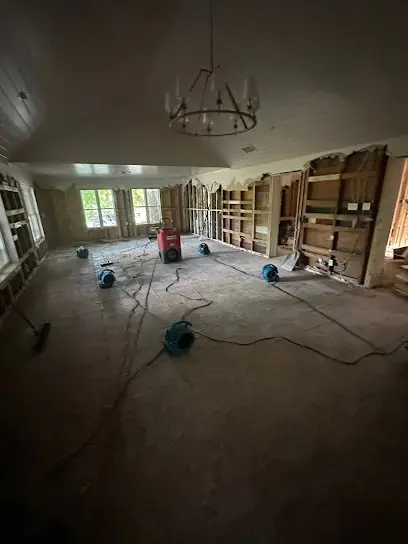
The restoration work starts in the attic. Wet insulation is removed and the decking and framing are checked with moisture meters.
Hail and roof leak water damage cleanup covers the attic, the ceiling and any walls the water reached.
The ceiling
A ceiling that is stained but firm can often be dried in place. A ceiling that has sagged, crumbled or been soaked through is cut out and replaced.
Framing and walls
After removal, air movers and dehumidifiers run until the readings are dry. The structural drying stage matters because closing up damp framing hides a problem instead of fixing it.
Keeping records after a storm
A few photos taken right after the storm make later decisions easier. They also show the order in which problems appeared.
It helps to keep a short log of when stains first showed and how they changed.
- Photograph the roof from the ground, the yard and any hail left on the ground.
- Note the date of the storm and the date each stain first appeared.
- Keep photos of wet attic insulation and the ceiling before anything is removed.
- Save notes from the roofer and the restoration crew in one place.
Roof checks that make sense after a storm
A roof inspection after a severe storm costs little compared with a ceiling repair. The Northglenn page lists the services for homes and businesses in the city, and the Commerce City office covers hail damage on its hail and roof leak water damage page.
- Look from the ground for missing, cracked or bruised shingles and for bent flashing.
- Check windows, screens and trim for chips and cracks.
- Look at the attic ceiling after the next rain for damp spots or drips.
- Check ceilings for new stains over the weeks after a storm, not only on the day.
Questions
Can hail damage cause a leak weeks later?
Yes. A bruised or cracked shingle may hold until the next heavy rain or snowmelt, and water then works through it into the attic.
Do I have to replace the ceiling after a roof leak?
Not always. A firm ceiling that reads dry after treatment can stay, while a sagging or crumbling ceiling is cut out and replaced.
Why remove attic insulation?
Wet insulation holds water against the framing and drywall, and it cannot be dried reliably in place, so it is taken out.
Should the roof or the water damage be fixed first?
Stop the water first. A roof repair keeps new water out, and drying removes the water that is already inside.
How can I tell if my ceiling stain is from the roof or a pipe?
A stain that appears after a storm and sits below the roof points to the roof. A stain that grows during dry weather or sits near a bathroom or kitchen is more likely a plumbing leak.