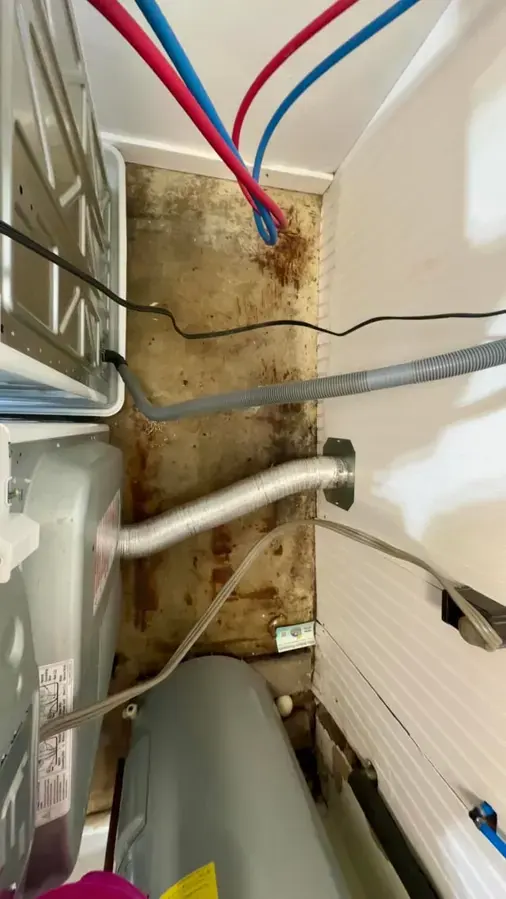
Commerce City sits on semi-arid high plains, which is why so many homes rely on evaporative cooling through the summer. The water supply that feeds a swamp cooler is easy to forget until the day it is turned off for the season or switched on again and something starts to drip.
Key takeaways
- The swamp cooler supply pipe is one of the plumbing failure points that matter most in Commerce City homes, next to aging supply pipe, frozen pipes and water heaters.
- Leaks tend to appear at a transition: when the cooler is shut down for the season or started up again.
- Shut off the cooler supply first, then the home's main shut off valve if the water keeps coming.
- Wet attic insulation and ceiling drywall are the usual losses, and water can travel down a wall cavity before any stain shows.
- Extraction and measured drying stop a small supply leak from becoming a ceiling replacement.
Why the cooler supply pipe is a weak spot
A swamp cooler cools air by running water through a pad, so a small supply pipe feeds it all summer. That pipe, its fittings and its shut off valve sit under steady pressure for months and then go idle.
Commerce City's local risk profile lists swamp cooler supply pipes alongside galvanized and early copper supply pipe, frozen pipes and water heaters in basements and utility closets. Of those, the cooler supply is the one most tied to the calendar.
- The fitting where the supply pipe meets the cooler can loosen after a season of vibration and temperature swings.
- The small shut off valve can weep once it has been turned and returned several times.
- An older section of galvanized or early copper pipe can pinhole, which matters most in the older south side and Derby area homes built after the war.
When swamp cooler leaks tend to show up
Most leaks are found at one of two moments. Both are worth knowing about because the water often runs unseen for a while.
At shutdown for the season
When the supply is closed and the system is drained, a worn valve or fitting can let go as it is handled. The leak may be small, but a pipe that is dripping inside a wall or above a ceiling can keep wetting insulation long after the cooler has been covered for winter.
A stain that appears weeks later in a ceiling often traces back to this moment.
At the first restart
When the supply is opened again the pipe sees full pressure after sitting idle. A thin crack or a corroded elbow that held when the pipe was dry can open up right then.
This is the leak that tends to be found fast, because a wet ceiling or dripping light fixture gets noticed quickly.
What to do right away
The goal in the first moments is to stop more water from reaching the structure. Do the following in order and stop as soon as the water stops.
None of these steps requires tools beyond a flashlight and a towel.
- Close the shut off valve on the cooler supply. If the water keeps coming, close the main shut off valve for the home.
- Switch off the cooler and, if the ceiling below is wet, turn off power to that room's lights and outlets at the panel.
- Move furniture and belongings out from under the wet area, and lift small rugs.
- Take photos of the stain, the pipe and any standing water before anything is moved or dried.
- Contact a restoration crew early. Clean water that is caught early is far easier to dry in place than water that has soaked the structure for days.
What the water has usually reached
A leak at a cooler supply starts high in the building, so gravity does the rest. Water follows framing, drains into wall cavities and wicks into whatever is below.
Plan on checking every layer between the pipe and the floor, since the visible stain is rarely the whole picture.
- Attic insulation, which holds water like a sponge and can sag onto the drywall.
- The ceiling drywall, which swells, stains and can soften enough to sag.
- The wall cavity below the leak, where water can run down inside the wall without a visible mark.
- Flooring and carpet under the wet area if the drip reached the room.
How the cleanup works
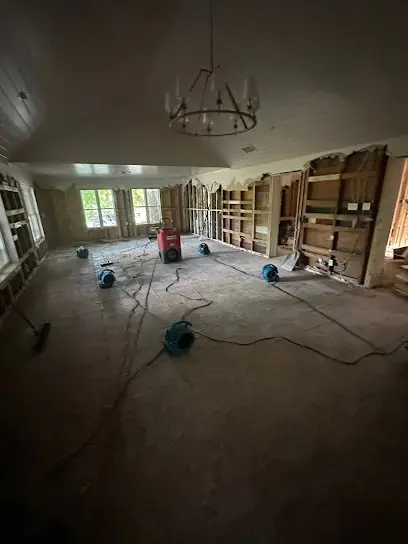
Cleanup begins with water extraction. If there is standing water or soaked carpet, water extraction and removal pulls it out before it wicks further into drywall and framing.
Wet insulation is removed because it cannot be dried reliably in place. Drywall that has stayed sound is dried rather than replaced where possible, and a ceiling that has sagged is cut out and replaced.
Finding the wet areas
Moisture meters and thermal imaging show where the water went, including inside wall cavities. That map decides where small access cuts are needed so nothing is torn out on a guess.
Drying until the readings agree
After removal, air movers and dehumidifiers run until the framing and drywall read dry against a reference. That measured approach is what structural drying and dehumidification is built around, and it is what keeps a small supply leak from turning into a hidden problem.
Details on how crews handle a leak that starts at a washer, dishwasher or cooler supply are on the appliance leak water damage page.
Preventing the next cooler supply leak
A few habits cut the odds of finding a wet ceiling next year. They take little time and cost very little compared with a ceiling repair.
- Know where the cooler shut off valve and the home's main shut off valve are, and test that each one turns.
- Look at the supply pipe and fittings at the start and end of the season for green crust, rust, drips or damp insulation.
- Replace an old valve or an aged section of supply pipe instead of tightening it again.
- Check the ceiling below the cooler after the first restart and again a few days later.
- If the pipe is galvanized or early copper, ask a plumber to look at the whole run, not only the leaking spot.
Questions
Is water from a swamp cooler supply leak clean water?
It starts as clean supply water, which is the easiest kind to dry. If it sits in insulation and drywall for days it can turn into a bigger cleanup, which is why early extraction matters.
Can a small drip above a ceiling be ignored?
Not safely. A slow drip can keep soaking attic insulation and framing, and the stain on the ceiling may only appear after the structure is already wet.
Do I need to replace the ceiling after a cooler leak?
Not always. Drywall that is still firm and reads dry after treatment can stay, while a ceiling that has sagged or crumbled is cut out and replaced.
Who handles the repair of the pipe itself?
A plumber repairs or replaces the pipe, valve or fitting. A restoration crew removes the water and dries the structure.
What should I photograph before cleanup starts?
Take photos of the leaking pipe, the stain, any standing water and the wet insulation if it is visible. Those records help with any later claim.